Corns & Calluses
Definition
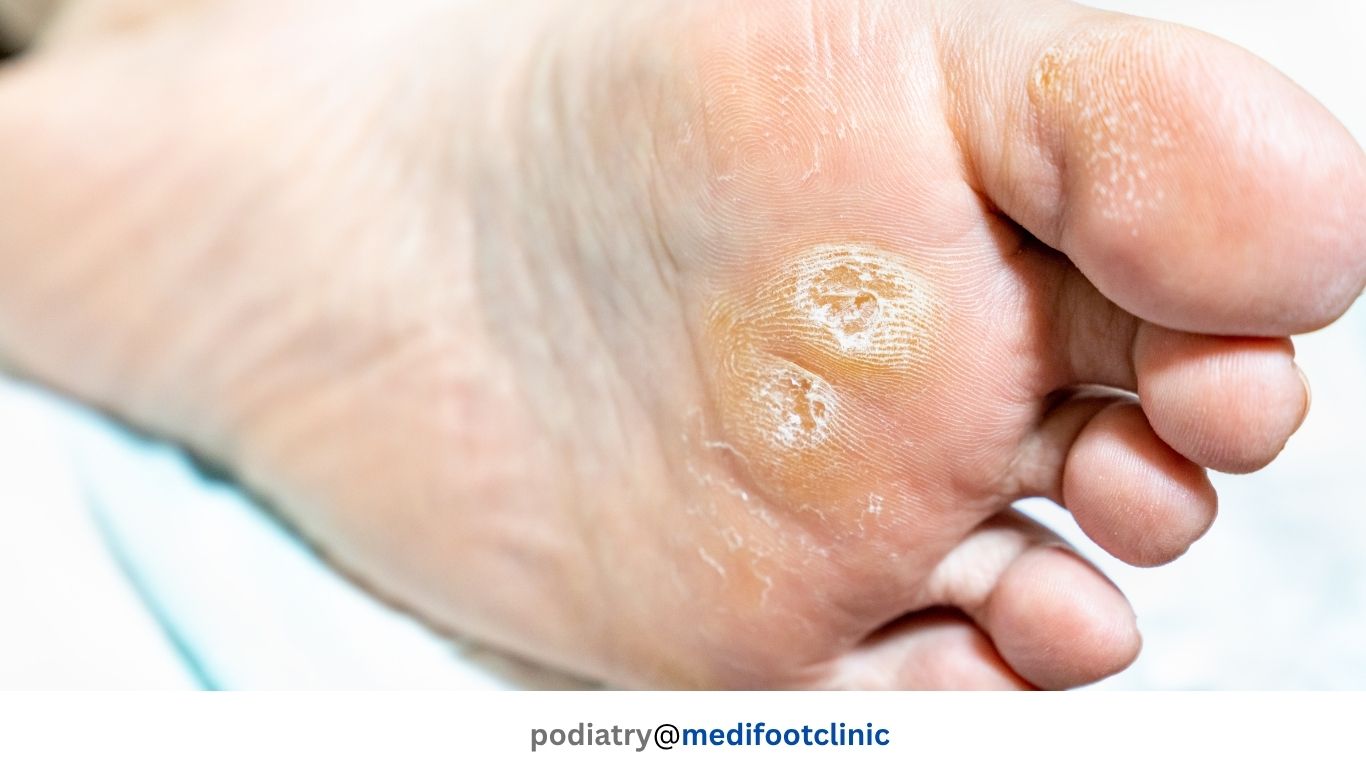
Callus is a diffuse thickening of the outer skin layer caused by repeated pressure or friction. A corn is a more focal, conical plug of hard skin that presses into deeper tissue and is often painful. They commonly occur on toes, the ball of the foot, and the heel.
Symptoms
Hard, thickened or yellowish skin; localised tenderness with a “stone-in-the-shoe” feeling (suggesting a corn); soreness around weight-bearing areas; and occasional cracking (fissures), especially on heels.
Causes
- Footwear that is tight or rubs on bony prominences
- Toe deformities (e.g., hammer/claw toes) and bunions altering pressure
- Biomechanics that increase focal pressure under the forefoot or heel
- Prolonged standing, repetitive activities, or rough seams/socks
Who can get corns & calluses?
- Anyone wearing tight or ill-fitting shoes or high heels
- People with toe deformities or bunions causing rubbing
- Workers who stand for long periods, runners, and walkers
- People with reduced sensation or circulation (extra caution required)
Risks
If not addressed, thick hard skin can split (fissure), become painful, and in at-risk feet (e.g., diabetes or poor circulation) may increase the chance of wounds and infection.
- Persistent pain and difficulty with footwear
- Skin breakdown on heels or under forefoot
- Recurrent corns over bony prominences
Prevention
- Wear wide, supportive footwear with a roomy toe box
- Use protective pads over rubbing areas; replace worn insoles/socks
- Apply urea-based emollients to keep skin supple
- Address underlying mechanics with orthotics where indicated
Treatment
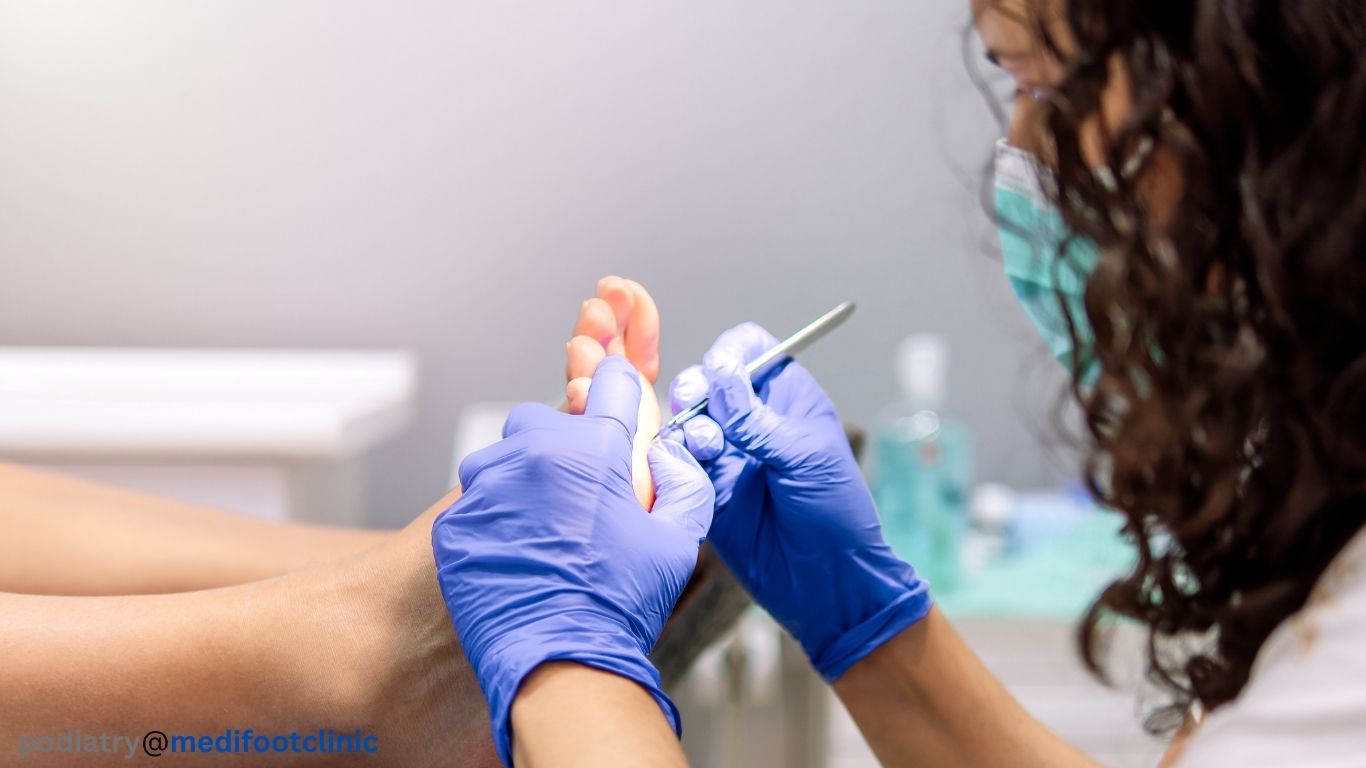
- Professional debridement of hard skin and corns
- Pressure redistribution: pads, silicone toe props, orthotics as needed
- Footwear advice and activity modification
- Regular urea-based emollients for skin care
If you have diabetes, neuropathy, or circulatory issues, avoid self-treatment with blades or chemical acids and seek podiatric care promptly.