Custom Orthotics vs Insoles
Both insoles and custom orthotics can help with foot pain — the right choice depends on what is causing your symptoms and how long they have been present.
For many people, a quality off-the-shelf insole combined with better footwear is enough to resolve the problem. Custom orthotics are more appropriate when the issue is mechanical, persistent, or recurring and has not responded to simpler measures.
If you are still deciding whether you need any form of orthotic support, our guide on whether you need orthotics is a useful starting point. If cost and value are your main concern, see are orthotics worth it.
In short
Insoles may be enough if:
- ✓ Your pain is mild or recent
- ✓ Symptoms improve with better footwear
- ✓ You only need simple cushioning or support
Custom orthotics may be more suitable if:
- ✗ Pain keeps coming back
- ✗ Walking, work, or sport is affected
- ✗ A specific foot mechanics issue needs addressing
If you are unsure, start simple — then seek assessment if symptoms continue.
Quick comparison
| Off-the-Shelf Insoles | Custom Orthotics | |
|---|---|---|
| Cost | Low — generally $20–$80 | Higher upfront; often partially covered by private health extras |
| Fit | Generic — sized by shoe size, not individual foot shape | Individual — made from a cast or scan of your foot |
| Assessment needed | Not required | Yes — full biomechanical assessment and prescription |
| Best use case | Mild, early-stage, or footwear-related problems | Persistent, recurring, or identified mechanical problems |
| Availability | Pharmacies, sports stores, online | Podiatry clinic only |
| Lifespan | 6–12 months | 2–5 years |
When Insoles Are Enough
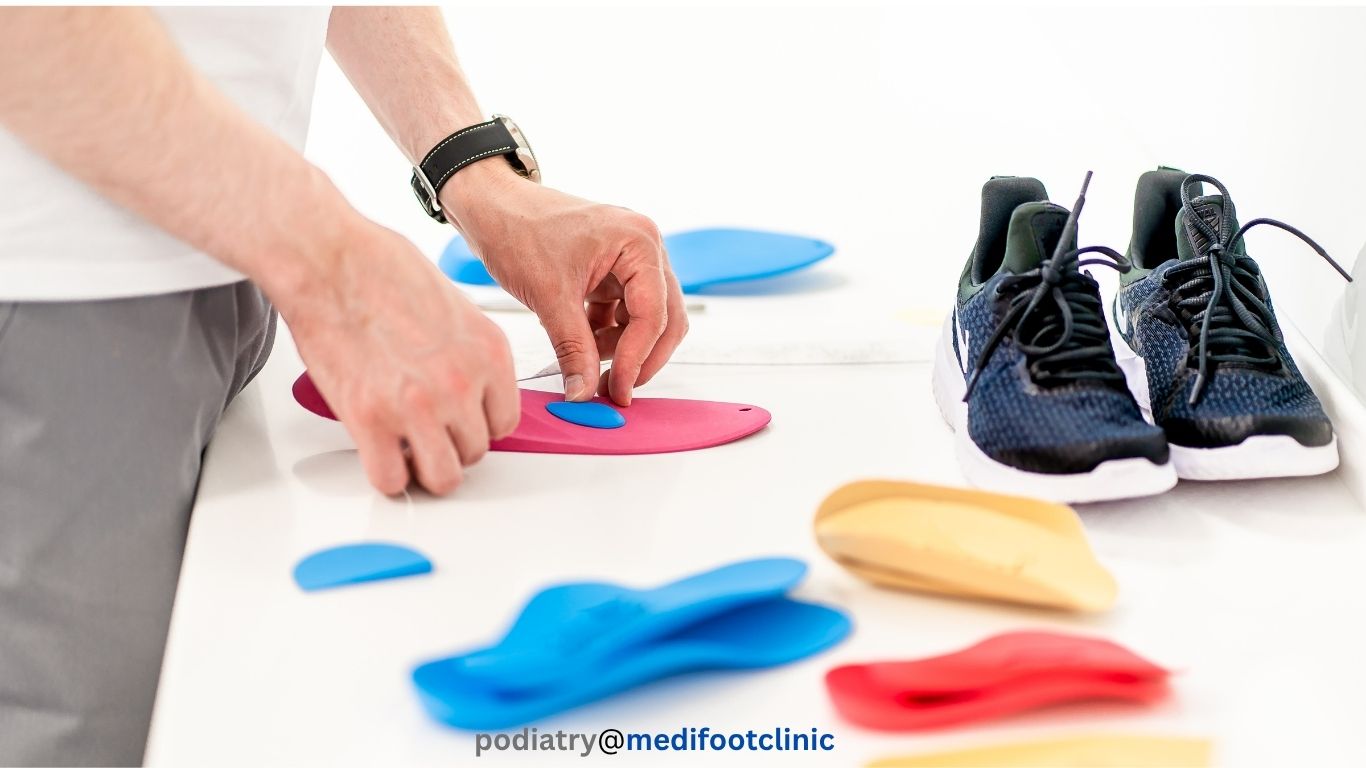
For a large proportion of people with foot discomfort, off-the-shelf insoles provide adequate support — particularly when combined with appropriate footwear. Insoles are a reasonable starting point when:
- Pain is mild and has been present for only a short time
- Discomfort is clearly linked to a recent change in footwear, activity load, or surface
- Symptoms are improving day by day without specific intervention
- The problem is general comfort or cushioning rather than a structural or biomechanical issue
- Early-stage arch or heel discomfort that has not yet been formally assessed
In these situations, trying a quality insole — combined with a footwear review — is a practical, lower-cost first step. If symptoms settle within a few weeks, further intervention is unlikely to be needed.
When Custom Orthotics May Be the Better Option
Custom orthotics are most appropriate when the problem is persistent, recurring, or clearly mechanical — and when insoles and footwear changes have not provided adequate relief:
- Pain that has lasted several weeks or months despite trialling insoles and footwear changes
- Recurring overuse injuries — such as shin splints, plantar fasciitis, or tendon problems — that keep returning despite rest
- Identified biomechanical issues — such as excessive pronation, supination, or structural foot problems — that are contributing to symptoms
- Pain that is affecting your ability to walk, work, exercise, or carry out daily activities
- Conditions such as diabetes where precise pressure redistribution is clinically important
In these situations, the individual precision of a custom orthotic — prescribed following a thorough biomechanical assessment — is more likely to address the underlying cause than a generic insert. For a full explanation of what the assessment involves, see our custom orthotics assessment and treatment page.
A Common Mistake in Both Directions
There are two patterns worth avoiding when it comes to insoles and orthotics:
Cycling through too many insoles
Trying multiple off-the-shelf insoles without improvement can delay the right assessment. If two or three insoles have not helped, the problem may be mechanical and may require a different approach rather than another product.
Jumping to custom orthotics too early
Custom orthotics prescribed before simpler options have been tried may not add meaningful benefit over what a quality insole and footwear change could have achieved. The right sequencing matters as much as the right product.
A proper podiatry assessment avoids both extremes by identifying what is actually driving the problem before recommending a solution.
Not Sure Which Option Is Right for You?
An assessment can clarify whether insoles are likely to be enough or whether custom orthotics are a more appropriate next step. There is no obligation to proceed with any treatment after an appointment.
No referral required · Conservative, assessment-first approach · Craigieburn and Gladstone Park
How to Decide: A Practical Approach
A straightforward way to think about this:
- Start with footwear — a well-fitted, supportive shoe resolves a surprising number of foot complaints without any additional insert
- Add a quality insole if needed — try one for three to four weeks; if symptoms are clearly improving, continue with it
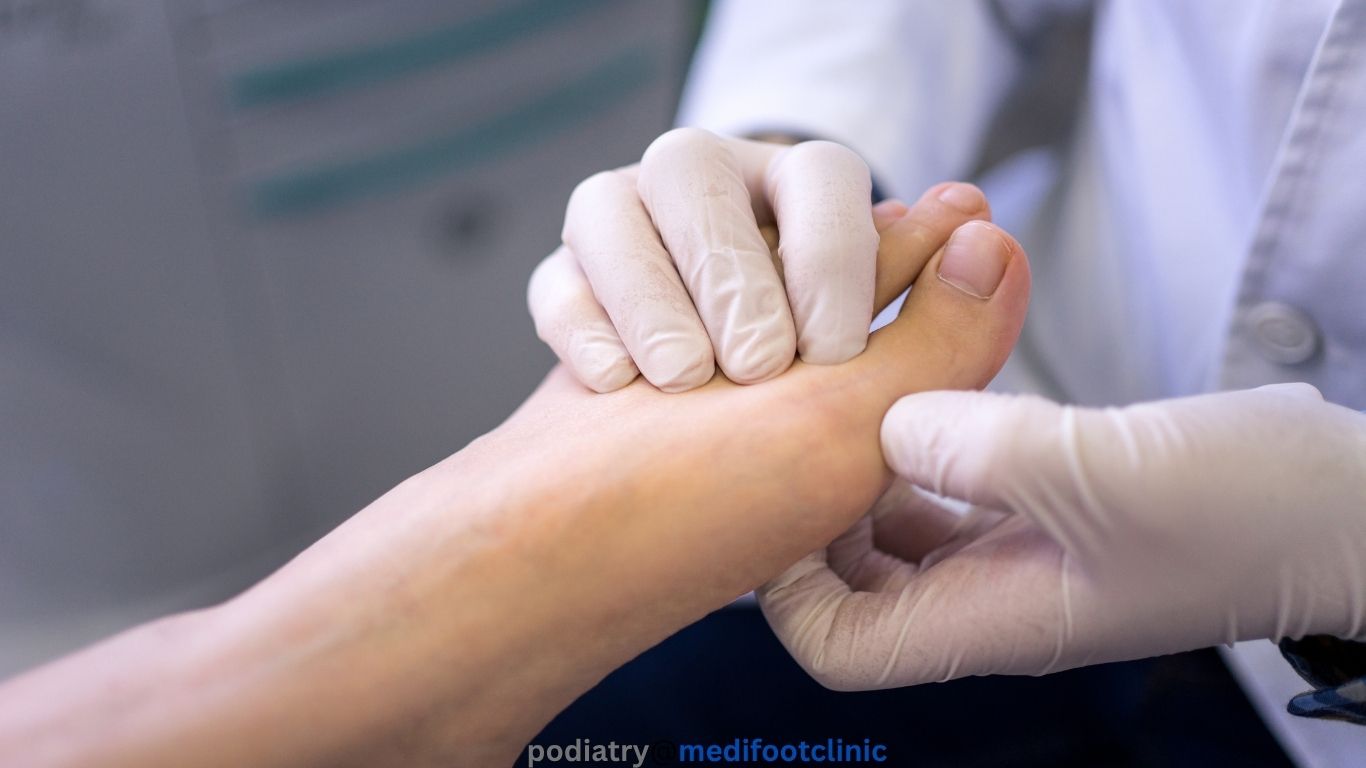
- Seek an assessment if insoles are not enough — if pain persists, worsens, or keeps returning despite these measures, a podiatry assessment can identify the cause and determine whether custom orthotics are warranted
- Avoid committing before understanding the cause — knowing whether the problem is structural, biomechanical, or load-related helps ensure the right solution is chosen the first time
If you are unsure where you are in this process, our guide on whether you need orthotics can help clarify the next step. If cost is a factor in your decision, see our guide on are orthotics worth it.
Practical Advice From Local Experience
Our podiatrists have been managing foot pain and assessing orthotic needs in Craigieburn and Gladstone Park for many years. That experience — seeing what actually works across a wide range of presentations — shapes practical, case-based recommendations. That includes being straightforward when a quality insole is the right answer, and equally clear when a custom orthotic is the better option.
For a full overview of what a custom orthotic assessment at Medifoot involves, see our custom orthotics assessment and treatment page.
Frequently Asked Questions
Are insoles enough for foot pain?
For mild or early-stage foot pain, a quality off-the-shelf insole combined with appropriate footwear is often enough. If symptoms persist despite these measures, a podiatry assessment can determine whether custom orthotics are warranted.
What is the difference between custom orthotics and insoles?
Off-the-shelf insoles are mass-produced to fit a range of foot shapes and provide general cushioning and arch support. Custom orthotics are individually designed from a cast or digital scan of your foot, prescribed following a biomechanical assessment, and tailored to correct a specific mechanical problem.
When should I upgrade from insoles to custom orthotics?
Consider a custom orthotic assessment if your pain persists despite trialling appropriate insoles and footwear, if the pain is recurring or getting worse, or if it is affecting how you walk or your ability to work, exercise, or manage daily activities.
Are custom orthotics worth it compared to insoles?
Custom orthotics are worth the additional cost when the underlying problem is mechanical and requires precise correction. For mild issues or early-stage discomfort, insoles are a reasonable and lower-cost starting point. For a detailed look at the value question, see our guide on are orthotics worth it.
Can I try insoles before seeing a podiatrist?
Yes. Trying a quality off-the-shelf insole with supportive footwear is a sensible first step. If symptoms do not improve within a few weeks, or if they are affecting your daily function, a podiatry assessment is a worthwhile next step.
How long do custom orthotics last compared to insoles?
Custom orthotics typically last two to five years. Off-the-shelf insoles generally last six to twelve months before losing their support. When spread over their lifespan, the cost difference between the two options is often smaller than it first appears.
Do I need a prescription for custom orthotics?
You do not need a GP referral to see a podiatrist. However, custom orthotics do require a podiatry assessment and prescription — they cannot be produced without a clinical evaluation and a cast or scan of your foot.
Still Unsure Whether Insoles or Orthotics Are Right for You?
An assessment is the clearest way to find out. Our podiatrists will look at the cause of your symptoms, what you have already tried, and give you an honest recommendation — including when insoles are the more appropriate option.
If you would like to know what the appointment involves before booking, read about what your first podiatry appointment involves.
We see patients from Craigieburn, Gladstone Park, and across Melbourne North.
No referral required · Conservative, assessment-first approach · No obligation to proceed with orthotics