Athlete's Foot Treatment
Athlete's foot is a common fungal skin infection that affects the feet, often causing itching, peeling, burning, redness and irritation between the toes or along the sole. It can start mildly but often becomes persistent if the warm, moist environment inside shoes allows the fungus to keep thriving. At MediFoot Clinic, we assess athlete's foot properly and help patients manage the infection while also reducing the chance of it returning.
Definition
Athlete's foot, also known as tinea pedis, is a fungal infection of the skin of the feet. It often affects the skin between the toes, but it can also involve the sole, sides of the foot or other areas where moisture and friction build up.
Symptoms
- Itching between the toes or on the sole
- Peeling, flaking or scaling skin
- Redness or irritation
- Burning or stinging sensation
- Skin that looks soft, white or soggy between the toes
- Cracked skin that may become sore
- Recurring foot odour associated with skin irritation
Causes
- Warm, moist feet inside shoes for long periods
- Excess sweating
- Walking barefoot in communal wet areas
- Breathability issues with socks or footwear
- Sharing towels, socks or footwear
- Spread from untreated fungal skin or nail infection, including fungal nail infection

Why Athlete's Foot Keeps Coming Back
Athlete's foot often returns because the fungus survives in warm, damp environments such as shoes, socks and communal wet areas. It can also recur when the skin is treated briefly but the surrounding risk factors are not changed. If there is also fungal involvement in the nails, the infection may keep re-seeding the skin.
Risks
If left untreated, athlete's foot can cause persistent irritation, painful cracks in the skin and spread to other areas of the foot. The skin irritation and moisture between the toes can also contribute to cracked heels when the infection spreads to drier areas of the foot. It may also contribute to or coexist with fungal toenails. In higher-risk patients, especially those with diabetes, poor circulation or reduced sensation, broken skin should be assessed promptly.
Prevention
- Dry carefully between the toes after washing
- Change socks regularly
- Rotate footwear to allow shoes to dry properly
- Wear breathable socks and shoes where possible
- Avoid walking barefoot in communal wet areas
- Do not share socks, shoes or towels
- Treat skin and nail fungal issues early
Treatment
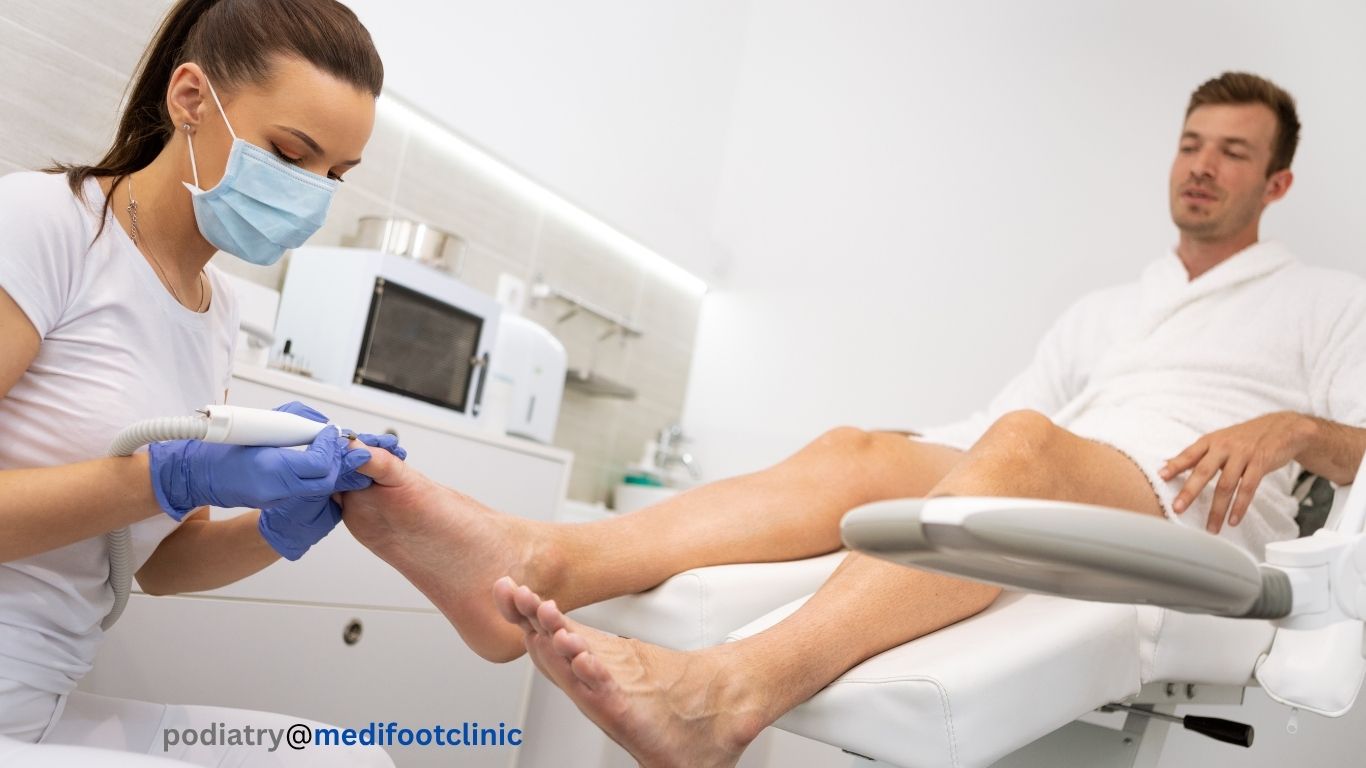
Treatment depends on the severity, location and persistence of the infection. At MediFoot Clinic, we assess the skin changes, look for contributing factors such as sweat, shoe environment and fungal nails, and guide you on the most practical next step. Management may include skin care advice, hygiene guidance, moisture control strategies and recommendations about when further medical treatment should be considered.
When to Get It Checked
You should get athlete's foot checked when the skin remains itchy, cracked, sore, recurrent or unclear in diagnosis. It is especially worth checking if the problem keeps returning, spreads to the nails or if you have diabetes, poor circulation or reduced feeling in your feet.
Athlete's Foot Treatment in Craigieburn and Gladstone Park
If you are dealing with athlete's foot in Craigieburn, Gladstone Park or nearby northern suburbs of Melbourne, MediFoot Clinic provides practical podiatry assessment and management for persistent fungal skin problems affecting the feet. Many patients come in after trying creams on and off without understanding why the infection keeps returning.
Frequently Asked Questions
Is athlete's foot actually caused by sport?
Not directly. The name comes from the fact that sweaty feet, shared wet areas and closed footwear make fungal infection more likely.
Can athlete's foot spread to the toenails?
Yes. Fungal skin infection and fungal nail infection can occur together, and one may contribute to the other.
Why does athlete's foot keep coming back?
Common reasons include moisture, sweaty feet, untreated shoes, incomplete treatment and fungal infection also being present in the nails.
Is every itchy foot rash athlete's foot?
No. Eczema, psoriasis, friction irritation and other skin conditions can sometimes look similar, which is why assessment helps.
Can a podiatrist help with athlete's foot?
Yes. A podiatrist can assess the skin, look for contributing causes, check for related nail infection and guide you on practical management.
Related Skin & Nail Pages
Need Help With Itchy, Peeling or Irritated Foot Skin?
If your skin problem keeps coming back or you are not sure whether it is athlete's foot, MediFoot Clinic can assess it and help you move forward with a practical treatment plan.