Corns & Calluses
Corns and calluses are common causes of foot pain, especially when pressure, friction, footwear, or underlying foot shape repeatedly irritate the skin. At Medifoot Clinic, we assess not only the hard skin itself, but also why it keeps returning. This page explains the difference between corns and calluses, their causes, treatment options, and when podiatry care may help. For a broader overview of skin and nail concerns affecting the feet, see our skin and nail care guide.
What are corns and calluses?
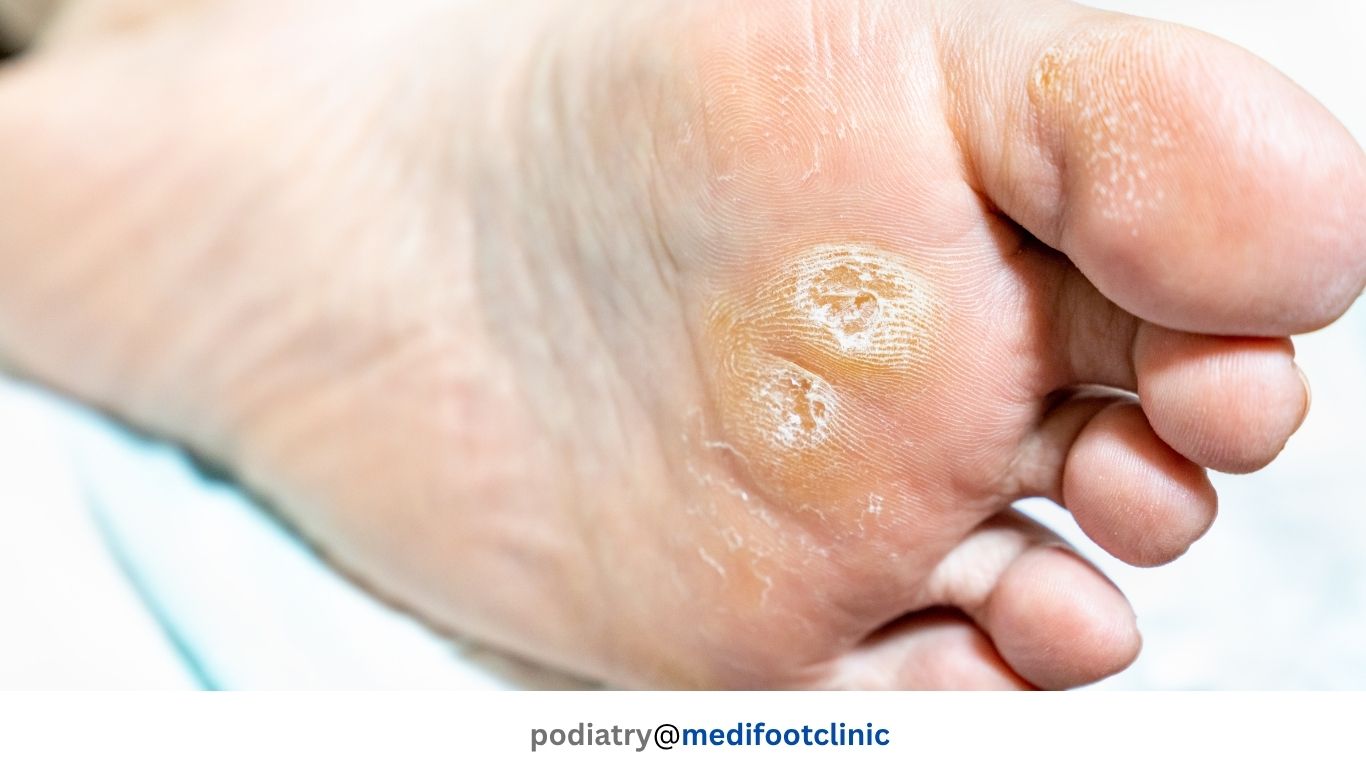
Corns and calluses are areas of thickened skin that develop when repeated pressure or friction affects the foot. Calluses tend to be broader and form over larger areas, while corns are smaller, more focused, and can become painful as they press into deeper tissue. They commonly develop on the toes, ball of the foot, and heel.
Definition
A callus is a diffuse thickening of the outer skin layer caused by repeated pressure or friction. A corn is a more focal, conical plug of hard skin that presses into deeper tissue and is often painful. They commonly occur on toes, the ball of the foot, and the heel.
Symptoms
Hard, thickened or yellowish skin; localised tenderness with a "stone-in-the-shoe" feeling (suggesting a painful corn); soreness around weight-bearing areas; and occasional cracking (fissures), especially on heels, which may relate to a cracked callus.
Causes
- Footwear that is tight or rubs on bony prominences
- Toe deformities (e.g., hammer/claw toes) and bunions altering pressure distribution across the foot
- Biomechanics that increase focal pressure under the forefoot or heel pain
- Prolonged standing, repetitive activities, or rough seams/socks
Related Corns & Calluses Problems
Some people develop a single painful corn, while others struggle with broader areas of hard skin, cracked calluses, or recurring pressure spots caused by footwear or foot structure. Explore the guides below for more detailed information.
Corns
Learn about hard corns, soft corns, pressure points, and why corns can feel like walking on a stone.
Calluses
Understand thickened hard skin on the ball of the foot, heel, or toes, and what causes it to keep building up.
Corn vs Callus
Not sure which one you have? This guide explains the difference in appearance, pain, and treatment.
Painful Corn on Foot
Focused on sharper, more urgent pain from a corn that hurts when walking or wearing shoes.
Cracked Callus Foot
Covers split, dry, painful hard skin and fissures, especially around the heel.
Who can get corns & calluses?
- Anyone wearing tight or ill-fitting shoes or high heels
- People with toe deformities or bunions causing rubbing
- Workers who stand for long periods, runners, and walkers
- People with reduced sensation or circulation (extra caution required)
Risks
If not addressed, thick hard skin can split (fissure), become painful, and in at-risk feet (e.g., diabetes or poor circulation) may increase the chance of wounds and infection. In some cases this starts as a recurring callus or becomes a more painful pressure lesion such as a corn.
- Persistent pain and difficulty with footwear
- Skin breakdown on heels or under forefoot
- Recurrent corns over bony prominences
Prevention
- Wear wide, supportive footwear with a roomy toe box
- Use protective pads over rubbing areas; replace worn insoles/socks
- Apply urea-based emollients to keep skin supple
- Address underlying mechanics with orthotics where indicated
How to manage corns and calluses at home
If corns or calluses are starting to cause discomfort, simple care at home may help reduce pressure and irritation. These approaches do not remove the underlying cause, but they may improve comfort and reduce symptoms in the short term.
- Wear properly fitting shoes with enough space around the toes
- Use cushioning pads to reduce pressure on affected areas
- Apply urea-based moisturisers to keep the skin soft and prevent cracking
- Avoid cutting or shaving hard skin yourself, especially if the area is painful
- Reduce activities or pressure if symptoms flare up
If the problem keeps returning or becomes painful, it is best to have the area assessed so the underlying cause can be addressed properly.
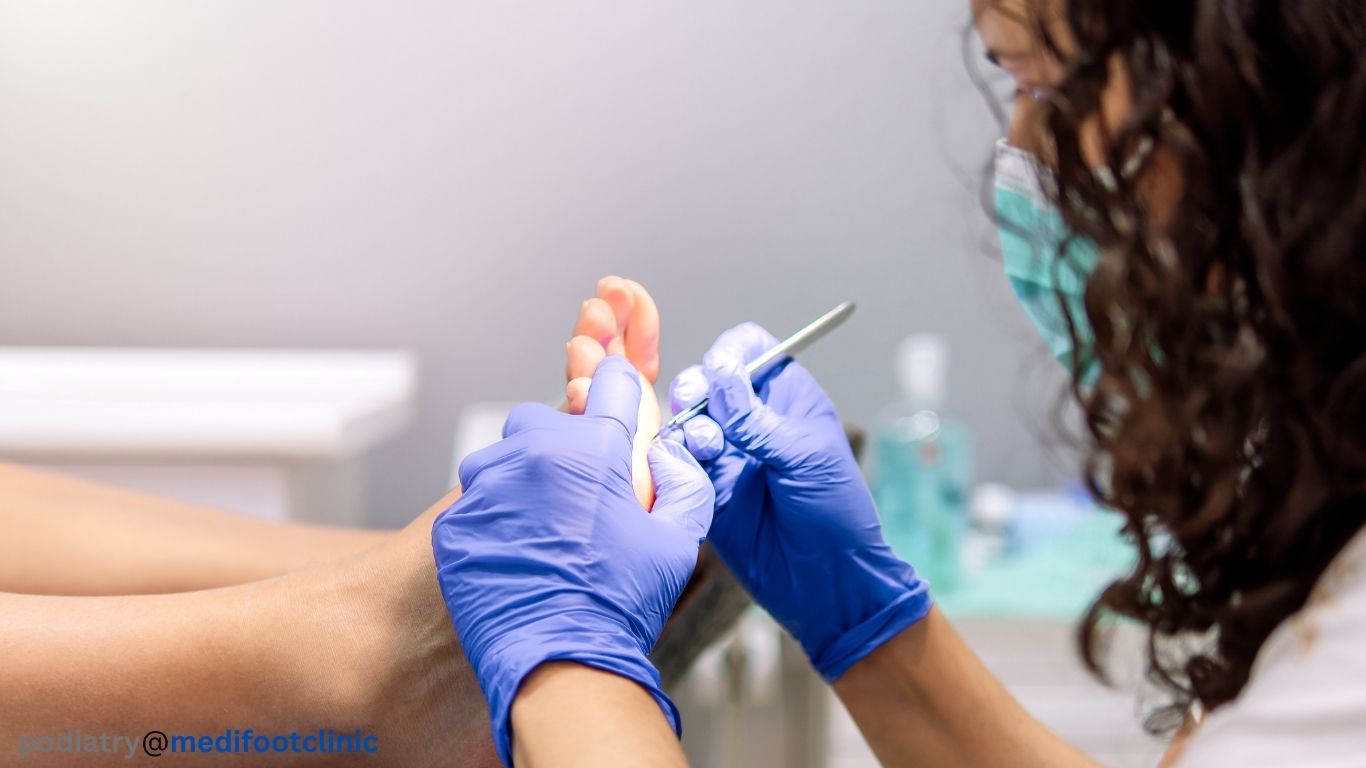
Treatment depends on whether the problem is a broader callus or a more focused corn that is pressing into deeper tissue.
Treatment
- Professional debridement of hard skin and corns
- Pressure redistribution: pads, silicone toe props, orthotics as needed
- Footwear advice and activity modification
- Regular urea-based emollients for skin care
Corns & Calluses Treatment in Craigieburn and Gladstone Park
Medifoot Clinic helps patients from Craigieburn, Gladstone Park, and surrounding Melbourne suburbs with painful corns, calluses, cracked skin, and pressure-related foot problems. Treatment may include careful removal of hard skin, pressure relief, footwear advice, and addressing the underlying mechanical cause where needed. Tradespeople are among the most common patients we see for this type of problem — tight steel-capped boots and prolonged standing on hard surfaces drive significant pressure and friction throughout the day, making corns and calluses particularly persistent unless footwear and load are properly addressed. Our page on foot pain for tradies covers how boot-related pressure contributes to skin problems and other foot conditions at work.
Frequently Asked Questions About Corns & Calluses
Are corns and calluses the same thing?
Not exactly. A corn is usually smaller, more focused, and often more painful because it presses deeper into the skin. A callus is broader and tends to form over a larger area due to repeated pressure or friction. You can also read our corn vs callus guide for a clearer comparison.
Why do corns and calluses keep coming back?
They often return because the source of pressure is still there. This may be related to footwear, toe shape, walking mechanics, prominent bones, or repeated rubbing in the same area. A recurring corn or callus usually needs more than simple skin removal if the underlying pressure pattern has not changed.
Can I remove a corn or callus myself?
Gentle skin care and moisturising may help some mild cases, but cutting hard skin yourself or using strong chemical corn treatments is not always safe. This is especially important if you have diabetes, reduced sensation, or poor circulation. If the area is very sore, it may be a painful corn or a cracked callus that needs professional care.
When should I see a podiatrist for corns or calluses?
It is worth getting checked if the area is painful, keeps returning, affects your walking, becomes cracked, or is difficult to manage safely at home. A podiatrist can also help identify whether you are dealing with a corn, a callus, or another pressure-related skin problem, and address the footwear or mechanical issue causing it.
How do I know if I have a corn or a callus?
Corns are usually smaller, more focused areas of hard skin that can feel like a sharp point when pressed, while calluses tend to be broader and less defined. Corns often develop on or between toes, whereas calluses commonly form on the ball of the foot or heel. If you are unsure, a podiatrist can assess the area and confirm what type of pressure-related skin problem it is.
Are corn plasters or over-the-counter treatments safe to use?
Some over-the-counter treatments contain acids designed to break down hard skin, but they are not suitable for everyone. They can irritate healthy skin around the area and may be unsafe for people with diabetes, poor circulation, or sensitive skin. It is usually safer to seek advice before using these treatments, especially if the area is painful or recurring.
What happens if I leave a corn or callus untreated?
If left untreated, corns and calluses can become thicker, more painful, and more difficult to manage. Cracks may develop in the skin, increasing the risk of infection, particularly in people with underlying health conditions. Ongoing pressure can also lead to recurring problems unless the underlying cause is addressed.
Explore More About Corns & Calluses
- Corns — focused information about hard corns, soft corns, and pressure-related pain.
- Calluses — broader thickened skin caused by repeated friction and load.
- Corn vs Callus — how to tell the difference between the two.
- Painful Corn on Foot — sharper, more urgent corn pain when walking or wearing shoes.
- Cracked Callus Foot — dry, split, painful hard skin and fissures.
- Skin & Nail Care — overview of all common skin and nail conditions treated at MediFoot Clinic.
When to Seek Podiatry Care for Corns & Calluses
Corns and calluses are common, but they should not be ignored when they become painful, keep returning, affect the way you walk, or start to crack. Ongoing pressure and friction usually mean the underlying cause has not been addressed.
- If the area is painful when walking or wearing shoes
- If hard skin keeps building back up in the same place
- If the skin becomes cracked, dry, or starts to split
- If you are unsure whether it is a corn, callus, or another lesion
- If you have diabetes, poor circulation, or reduced sensation in your feet
If you have diabetes, neuropathy, or circulatory issues, avoid self-treatment with blades or chemical acids and seek podiatric care promptly. Calluses, corns, and pressure areas carry more risk in diabetes — you can read more about how they are managed through our diabetes foot assessment page.
If you are unsure whether your symptoms need professional care, our do I need a podiatrist guide can help you decide. If you are ready to book, it also helps to know what to expect at your first appointment.
See our overview of foot conditions treated by our podiatrists if you are looking for information about related skin, nail or structural foot problems.