Foot Pain for Tradies
Tradies put more demands on their feet than most. Long days on concrete floors, climbing ladders, working on uneven ground, crouching under benches and carrying heavy loads all place repeated stress on the feet and lower limbs. Add steel-capped boots that are often stiff, tight or poorly fitted and it is easy to see why foot pain is so common among tradespeople in Melbourne North — including those working in and around Craigieburn and Gladstone Park.
The problem is that many tradies push through the discomfort because stopping work is not always practical. But foot pain that is ignored tends to get worse over time, and what starts as mild heel tenderness at the end of a shift can become a persistent problem that affects both work and daily life. Our broader foot pain conditions guide covers the common patterns that affect people who spend long hours on their feet.
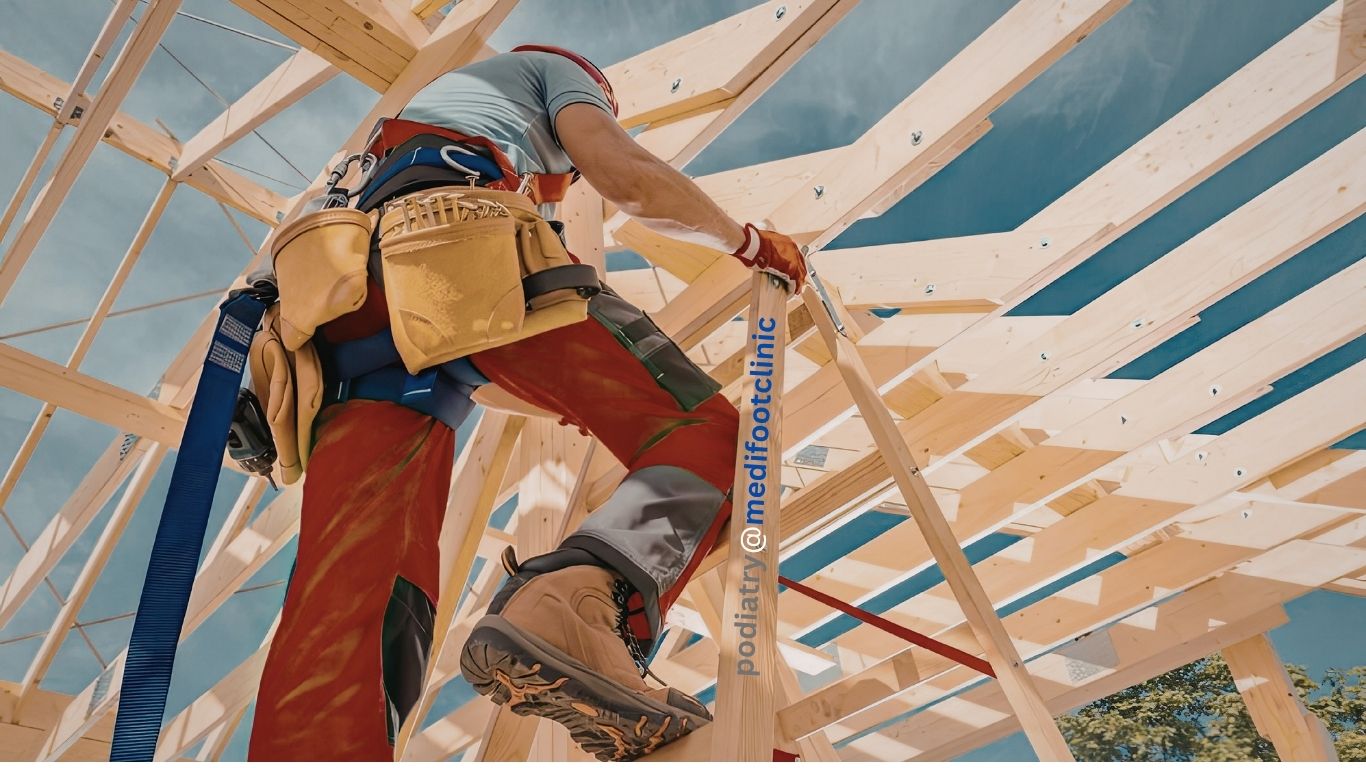
Why Tradies Are at Higher Risk of Foot Pain
Trade work places a specific combination of demands on the feet that most office or sedentary jobs do not. The risks include:
- Long hours of standing and walking on hard surfaces such as concrete, timber floors and asphalt
- Repetitive loading through the same foot structures day after day with little variation
- Heavy steel-capped boots that restrict natural foot movement, limit toe space and add significant weight to each step
- Tight work boots that compress the forefoot and toes throughout a full shift
- Ladder climbing, which places concentrated load through the ball of the foot and forefoot
- Working on uneven ground, scaffolding or roofs, which loads the foot unevenly and stresses the ankle and arch
- Crouching and kneeling, which increases pressure through the toes and forefoot
- Minimal recovery time between shifts when foot pain is already developing
Common Foot Problems Tradies Experience
The most frequent complaint among tradies is heel pain, which often develops from standing on hard surfaces for long periods in boots that lack adequate cushioning or arch support. Plantar fasciitis — irritation of the thick tissue band running under the foot — is a common cause of this kind of heel pain, particularly the sharp first-step pain in the morning or after sitting down during a break.
Heel spurs are a related but distinct condition that often develops alongside plantar fasciitis in people who spend long hours on hard surfaces. A heel spur is a bony growth that forms on the underside of the heel bone in response to repeated stress on the plantar fascia attachment. Many tradies have a heel spur without knowing it — it only becomes relevant when it contributes to localised heel tenderness that does not settle with rest.
Ball of foot pain is one of the most common forefoot complaints in tradespeople. The clinical term for this type of pain is metatarsalgia — irritation and inflammation around the metatarsal heads, the bony prominences that sit just behind the toes. Tradies are particularly susceptible because so many aspects of the job drive forefoot overload: long hours on concrete, steel-capped boots with rigid soles and little cushioning, ladder climbing that concentrates load under the ball of the foot, and crouching work that increases pressure through the toes and forefoot throughout the day. The result is often an aching or burning sensation under the front of the foot that builds through a shift and is noticeably worse after a full day in work boots.
Heavy work boots often cause corns and calluses to develop over pressure points — particularly on the toes, ball of the foot and the sides of the heel. When these are left unmanaged, they thicken and become painful underfoot, which further affects how the foot loads through the day.
Tradies with a pre-existing bunion often find that tight work boots aggravate the joint significantly. The rigid toe box places direct pressure on the prominence, and by the end of a shift the area can be inflamed and sore. Choosing appropriate work footwear and addressing the mechanics behind the bunion early can make a meaningful difference to how well it is tolerated during work.
Skin and nail problems are also common due to pressure, moisture and friction inside work boots throughout the day. Thickened toenails, fungal infections, cracked heels and nail bruising from tight toe boxes are all problems we see regularly. Our skin and nail care page covers these concerns in more detail.
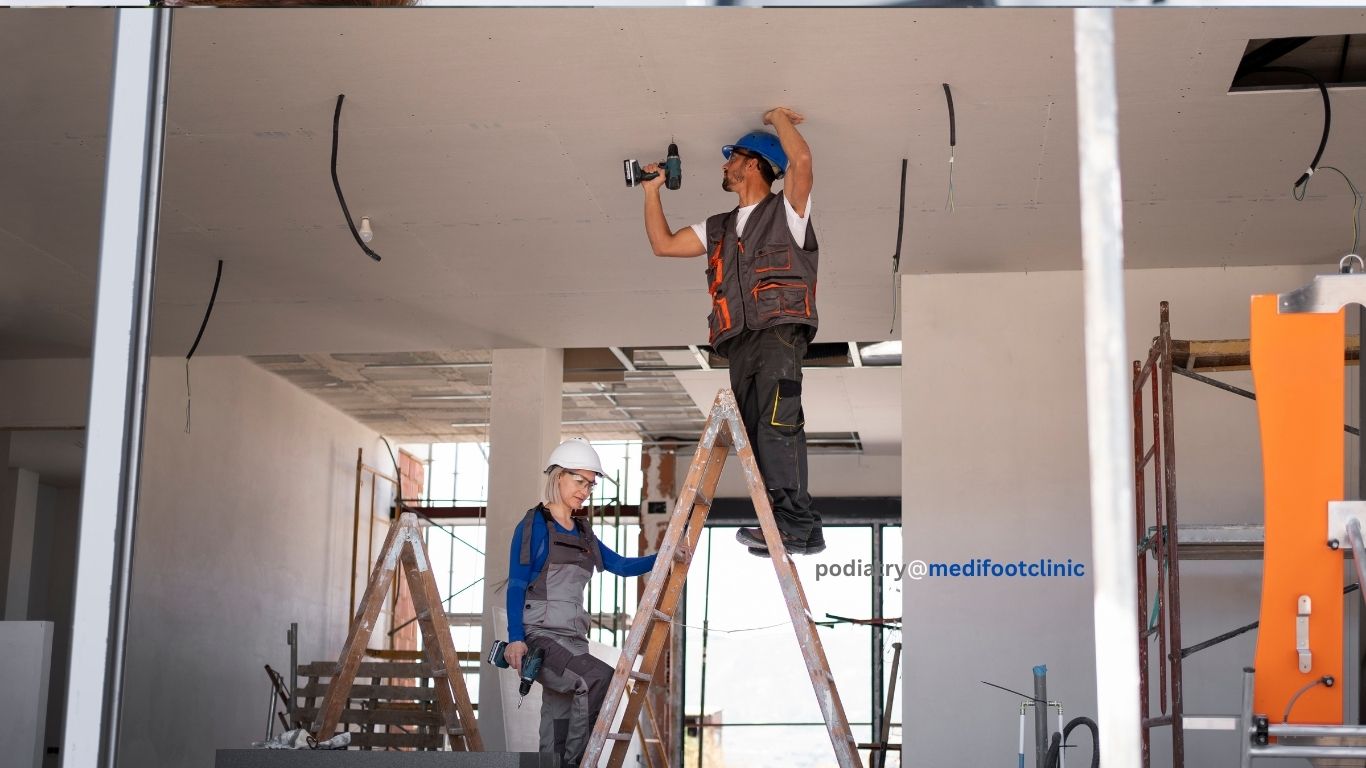
Signs Tradies Should Not Ignore
Many tradies normalise foot discomfort because it is so common in their line of work. But some symptoms are worth getting checked sooner rather than later:
- Sharp pain with the first steps out of bed or after sitting during a break
- Heel or arch pain that builds up during a shift and stays with you after work
- Aching, burning or tenderness in the ball of the foot after long hours in work boots, especially following time on a ladder or standing on concrete
- Pressure spots or hard skin underfoot that become painful through the day
- Limping at the end of a shift or noticeably changing how you walk to avoid pain
- Pain inside the work boot over a bunion or bony prominence that worsens as the day goes on
- Toenails that are bruised, thickening or lifting from pressure inside the boot
- Foot or heel pain that does not settle after a weekend off work
What Can Help Tradie Foot Pain
The right approach depends on what is actually causing the pain and how the foot is loading through the day. In many cases, practical steps can reduce discomfort significantly without major disruption to work. These may include:
- Footwear review — assessing whether the current work boot is contributing to the problem and what to look for in a more suitable option
- Pressure relief — reducing load over specific pressure spots using padding, insoles or footwear modification
- Orthotic support — where foot mechanics are contributing to heel, arch or forefoot pain, a custom or prefabricated orthotic may help redistribute load more evenly through the working day
- Load management — advice on modifying activity where possible during recovery, particularly for conditions that respond well to reduced repetitive stress
- Skin and nail care — reducing painful corns, calluses and thickened nails that are aggravated by boot pressure
- Early treatment — addressing the problem before it becomes persistent usually means a simpler treatment plan and a faster return to full comfort at work
When to See a Podiatrist
- Foot or heel pain that has lasted more than two to three weeks without clear improvement
- Pain that is affecting the way you walk or disrupting your ability to complete a full shift comfortably
- Recurring pain that settles on days off but returns as soon as you are back at work
- Hard skin, corns or pressure spots that are becoming painful and are not improving with home care
- Any skin or nail changes you are unsure about, particularly if you have diabetes or poor circulation
- Foot or lower leg pain that is affecting sleep, rest or activities outside of work
- Your foot condition developed or worsened due to your work and you want to understand whether a WorkCover claim or Medicare Care Plan may apply — our podiatrists can advise at your assessment
FAQ
Can I keep working with plantar fasciitis?
In most cases yes, though it depends on severity. A podiatrist can advise on load management strategies — such as footwear changes, taping or temporary insole support — that allow you to continue working while the condition is being treated. Pushing through without any management tends to extend recovery time significantly.
Are custom orthotics worth it for work boots?
For tradies with recurring heel, arch or forefoot pain, custom orthotics can make a meaningful difference because they are designed specifically for your foot mechanics and can be fitted to work boots. Prefabricated insoles are a lower-cost starting point and work well for many people. A podiatry assessment will clarify which is appropriate for your situation.
What is the best insole for steel cap boots?
There is no single best insole — it depends on the shape of your boot, the width of the toe box and what is causing your pain. A podiatrist can assess your foot type, your current footwear and your work demands and recommend a suitable option, whether that is a prefabricated insole or a custom orthotic.
How long does heel pain take to go away?
With the right management, many people see meaningful improvement within four to eight weeks. Without treatment, plantar fasciitis and heel pain can persist for months. The sooner it is assessed and managed, the faster the recovery tends to be.
Does Medicare cover podiatry for tradies?
Medicare does not cover standard podiatry consultations. However, if you have a chronic condition managed by your GP, you may be eligible for a Medicare Chronic Disease Management Plan (formerly Enhanced Primary Care plan), which provides a rebate for up to five allied health visits per calendar year. Speak to your GP about whether you qualify.
Can a podiatrist write a report for a WorkCover claim?
Yes. If your foot condition is work-related, a podiatrist can provide clinical documentation to support a WorkCover claim. This may include assessment findings, diagnosis, treatment recommendations and an opinion on whether the condition is consistent with your work duties. Mention this at your appointment and we can advise on what is needed.
Podiatry for Tradies in Craigieburn and Gladstone Park
Medifoot Clinic sees a significant number of tradespeople from Craigieburn, Gladstone Park and surrounding Melbourne North suburbs. Workers in construction, warehousing, manufacturing and trade industries are among the most common presentations for foot pain, particularly heel pain, forefoot pain and skin problems related to heavy boot use.
We understand that tradies often cannot take extended time off work and need a practical, efficient approach to getting foot pain under control. Our assessments are focused on identifying the real cause of the problem, providing clear advice and putting a realistic management plan in place that works around your schedule and your work demands.
Book a Foot Assessment
If foot pain is affecting your work, do not wait for it to become a bigger problem. Medifoot Clinic provides practical podiatry assessments for tradespeople at our Craigieburn and Gladstone Park locations.